
Change stories and videos
Reaching a New Generation: How One Journalist Is Keeping Independent Media Alive for Young Belarusians
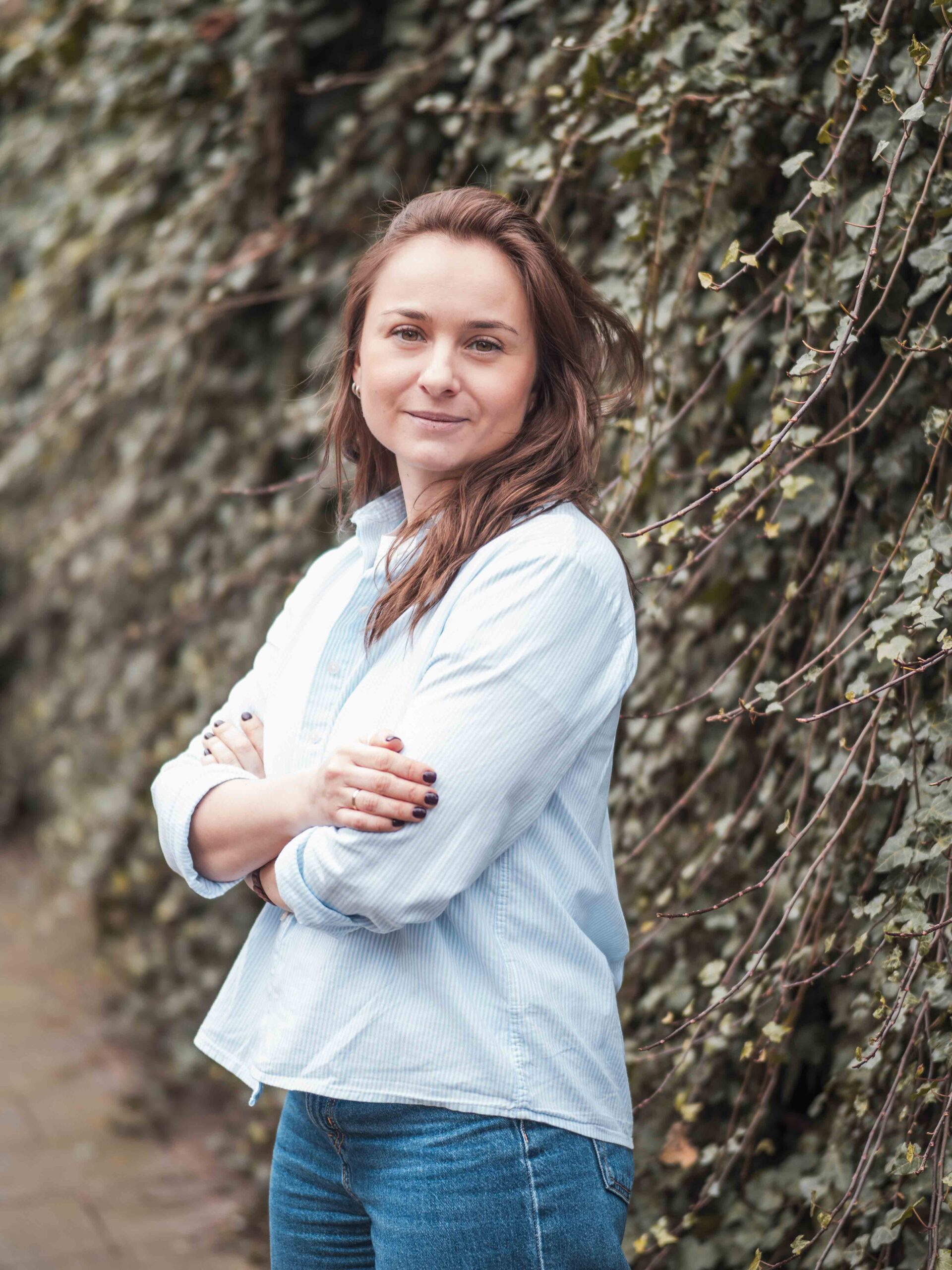 In Belarus, the truth is hard to find — and for a generation of young people who came of age after the 2020 crackdown, it has never been easy to access. State-controlled narratives dominate. Independent media operates under constant pressure. And a new generation of 18 to 24 year-olds, with no direct memory of the protests that shook the country, is growing up with little exposure to credible, independent journalism.
This is the environment in which one JST Fellow decided to act.
Anna Yafremenka, a Senior Digital Editor at Current Time Belarus – part of Radio Free Europe/Radio Liberty – could see that independent media was at risk of speaking only to those who were already converted. Older, politically engaged audiences were being reached. But a younger generation, shaped entirely by censorship and state messaging, was not.
So she changed her approach entirely.
Rather than continuing to produce content aimed at audiences already familiar with Belarus's recent political history, she and her team began asking a different question: what does Generation Z actually care about? The answer led them to education, housing, grants – the practical realities of young people's lives.
They simplified their language. They embraced TikTok. They used cultural references, humour and formats that felt native to a generation raised on social media rather than newspapers.
The results were striking. Over the past year, the TikTok channel gained eight million new views. The proportion of young viewers aged 18 to 24 rose from under 20% to over 32%. These are not just numbers – they represent young Belarusians choosing to seek out independent information in an environment designed to prevent exactly that.
But the change went deeper than content strategy. She also transformed how she led her team. Working closely with a Generation Z journalist, she delegated responsibility for youth-focused content to someone whose instincts and language were naturally aligned with the audience. In a large, bureaucratic media organisation, she negotiated space for experimentation without compromising editorial standards – creating a culture where innovation and integrity could coexist.
None of this happened in isolation. Her JST fellowship was, by her own account, catalytic. Conversations with UK media professionals – including advice from a BBC contributor on communicating with younger audiences – gave her both practical tools and the confidence to test new approaches. Leadership training during the fellowship changed how she manages, delegates and builds trust within her team. The connections she made continue to inform her work.
What she has built is not a campaign. It is a new editorial direction – embedded in her organisation's strategy, its team structure and its long-term planning. Independent media in Belarus now has a stronger foothold with the generation that matters most for the country's future.
This is what JST investment makes possible: not just skills and knowledge, but the confidence, connections and leadership capacity to turn insight into lasting change – even in the most difficult circumstances.
Growing green business and rebuilding lives across Central Asia
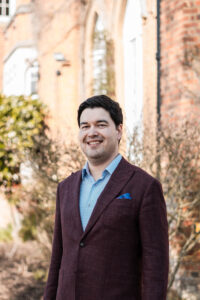
JST Fellow Farrukh Irnazarov is helping Central Asia's economies turn green, digital — and more inclusive.
Farrukh Irnazarov, from Uzbekistan, is CEO and co-founder of two organisations working to shape the region's economic future: RANSIF Group, which advises international companies investing in Central Asia, and the Central Asian Development Institute, a think tank working across all five Central Asian countries. Alongside policy work with organisations including the World Bank and Asian Development Bank, the Institute runs leadership courses for public officials and entrepreneurs — training more than 3,000 people to date in negotiation, communication, and business strategy, backed by a mentorship programme to help them put those skills into practice.
That same instinct — building people's capacity, then backing them to use it — runs through Farrukh's work on the ground.
From empty land to a thriving destination
In Uzbekistan's Bukhara region, Farrukh's team worked with Iqlima, a local landowner, as part of a USAID project. With training and an in-kind contribution of yurts to host visitors, Iqlima planted more than 2,000 trees and built an agri-tourism business from land that had nothing on it. The project now provides employment for people from neighbouring communities and tackles deforestation and desertification in the process.
“She turned this empty piece of land, which literally had nothing, into an agri-tourism location,” says Farrukh. “Now, if you look at the place on Google Maps, it's a very green area. People from all over the world come to stay at this place and have a unique immersion into Uzbek culture, from cooking classes to hunting.”
The model draws on research Farrukh's team carried out into agri-tourism best practice in Italy and the US — evidence that a sustainable rural income doesn't have to come at the expense of the land. It's a principle he's now applying more widely through a green entrepreneurship index he's developing in Uzbekistan, designed to show international investors which businesses are adopting greener practices, and to demonstrate to local entrepreneurs that sustainability and profitability aren't at odds.
“People think if you don't see an immediate profit, then why bother with green activities?” he says. “We're trying to show that the greener you get, the better your prospects are to attract international investment.”
New starts for returning migrants
Farrukh has applied the same approach — asking people what they need, rather than telling them what to do — to support some of the region's most vulnerable workers. During his JST fellowship, he developed a plan to improve migration governance across Central Asia, focusing on migrants returning from Russia, the traditional destination for labour migrants from Uzbekistan, Kyrgyzstan and Tajikistan.
His team created entrepreneurship opportunities for 82 returning migrants who had been blacklisted in Russia, helping them launch businesses — from sewing to car repair — built around what they wanted to do, with in-kind support to get started. Many are still active across Central Asia today, and some have gone on to employ fellow returning migrants.
Building a digital Silk Road
With safe land trade routes limited by the region's landlocked position between sanctioned neighbours, Farrukh sees the same spirit of turning constraint into opportunity playing out at a national scale — this time through the digital economy.
“Sometimes when you are deprived of one opportunity, another opens,” he says. Uzbekistan has already trained a million young people as coders, and Farrukh is now working to connect that talent to real work. “There's a huge interest in developing IT services, and a political will behind it. I think it's the perfect momentum to transform the region into a digital Silk Road.”
A growing UK–Central Asia partnership
Farrukh traces much of this way of thinking back to his 2017 JST fellowship, which took him to institutions across the UK — including the Mellon Centre for Migration Studies in Omagh, Northern Ireland, reflecting his interest in migration policy. “The major takeaway was seeing how institutions in the UK function and complement each other,” he says — an insight he has carried into his own work on accountability, transparency, and institutional credibility back home.
Eight years on, that network remains active: Central Asian Fellows stay in touch on WhatsApp, meet when they travel, and have collaborated on joint projects. JST recently brought Farrukh and other Central Asian Fellows together with Lord Alderdice, the UK's trade envoy to Azerbaijan and Central Asia — a meeting Farrukh sees as the start of a two-way opportunity.
“As JST Fellows, we have seen how things work both in the UK and in Central Asia,” he says. “There is huge potential to boost trade — in digital development, entrepreneurship, and investment flowing both ways.”